

Parking Deck & Traffic Coatings
Water and chlorides destroy structural concrete from the top down. Maverick’s deck system — MavPrime EP, a MavCoat FC basecoat carrying an angular silica broadcast to rejection, and a pigmented MavSeal UPA traffic topcoat — seals the driving surface, takes the abuse of turning tires and snowplows, and keeps de-icing salts off the deck.
A Sealed Driving Surface, Detailed Around the Movement
A vehicular traffic coating is a bonded, seamless system applied to concrete parking decks: a primer, a rapid-cure basecoat carrying an aggregate broadcast to rejection for skid resistance, and a pigmented traffic topcoat. Its job is to keep water and the chlorides in de-icing salts off the structural slab, where they corrode reinforcing steel. Maverick’s deck system is MavPrime EP, MavCoat FC with an angular silica broadcast, and pigmented MavSeal UPA.
Parking structures flex, thermally cycle, and crack, and no coating changes that. Moving joints and working cracks are treated as joints and cracks — routed and filled before coating, then carried through the finished system rather than covered over. Broadcast wear courses under the topcoat take the punishment of turning tires, snowplows, and grit, and MavCoat Polyurea is available where ramps and turn lanes need a higher-elongation layer.
Build-ups are zoned to the work the deck actually does: heavy-duty courses at turn lanes, ramps, and ticket spitters; standard courses at parking bays. The result is a single continuous surface with wear resistance placed exactly where it's consumed.
Why Owners Specify the Maverick Deck System
- Seamless, bonded surface — no laps or seams across the driving surface to open up under traffic.
- Joints honored, never bridged — moving joints are carried through the system; cracks are routed and filled before coating.
- Blocks chloride intrusion from de-icing salts — the leading cause of rebar corrosion.
- Aggregate-broadcast wear courses deliver skid resistance on slopes and ramps.
- Pigmented UV-stable topcoat — MavSeal UPA polyaspartic, or MavSeal HWU high wear urethane, with striping and demarcation coated into the system.
- Phased installation keeps the structure open — work proceeds bay by bay, level by level.
Deck System Cross-Section
MavPrime EP, a MavCoat FC basecoat carrying an angular silica broadcast to rejection, and a pigmented MavSeal UPA traffic topcoat — per-layer thicknesses on each product TDS. Drive-lane and turn-lane zones receive an additional wear course over the same continuous system.
Every Component, Documented
The products that make up the system, what each one does, and where to get its technical data. Components are supplied as factory-batched kits and installed by Maverick crews per the project specification.
| Application | Product | Function in the System | Documents |
|---|---|---|---|
| Primer | MavPrime EP | Penetrating epoxy primer over prepared deck concrete. | TDS (PDF) |
| Rapid-cure basecoat | MavCoat FC | Fast-cure base layer that always receives an aggregate broadcast — never standalone, never a topcoat. | TDS (PDF) |
| Wear course aggregate | Angular Silica Broadcast | Broadcast to rejection into the basecoat for traction and the wear profile. | Request TDS |
| Traffic topcoat | MavSeal UPA | Pigmented UV-stable polyaspartic traffic topcoat that locks the broadcast into the system. | TDS (PDF) |
| High-wear topcoat | MavSeal HWU | Pigmented high-wear urethane wear coat with striping and demarcation coated into the system. | TDS (PDF) |
| High-abuse lanes | MavCoat Polyurea | High-elongation polyurea for ramps, turns, and high-abuse lanes. | TDS (PDF) |
Built for Wheels and Weather
- Parking Structures
- Plaza & Podium Decks
- Vehicle Ramps
- Stadiums & Arenas
- Balconies & Walkways
- Mechanical Rooms
Typical Properties
| Property | Test Method | Typical Value |
|---|---|---|
| System build | Per layer | Primer + rapid-cure basecoat + aggregate broadcast to rejection + pigmented traffic topcoat — per-layer thicknesses on each product TDS |
| Elongation (MavCoat Polyurea) | ASTM D638 | 65% |
| Adhesion to concrete (MavCoat Polyurea) | ASTM D4541 | >400 psi |
| Adhesion to concrete (MavSeal HWU) | ASTM D4541 | >300 psi |
| Abrasion resistance, wear coat (MavSeal HWU) | ASTM D4060, CS-17, 1 kg, 1,000 cycles | 12 mg loss |
| Return to vehicle traffic | 72 °F / 50% RH | 48 hours |
Common Questions
How does a traffic-coating system protect a parking structure?
Water and chlorides destroy structural concrete from the top down. The system forms a seamless bonded surface that keeps chloride-laden meltwater off the deck — chloride intrusion is the leading cause of rebar corrosion — with no laps or seams across the driving surface for water to find.
How does the deck system handle cracks and moving joints?
Moving joints and working cracks are honored through the system rather than bridged by it. Maverick’s data sheets are explicit that moving joints and shrinkage cracks can reflect through a coating, so the system is detailed around them: cracks are routed and filled before coating, and joints are carried through the system as joints. That is what keeps the coating intact through thermal cycling instead of tearing it at the first slab movement.
Does the parking structure have to close during installation?
No. Phased installation keeps the structure open — work proceeds bay by bay, level by level, and coated areas return to vehicle traffic in 48 hours.
How is wear resistance handled at ramps and turn lanes?
Build-ups are zoned to the work the deck actually does: heavy-duty aggregate-broadcast wear courses deliver skid resistance at turn lanes, ramps, and drive lanes, finished with the MavSeal HWU pigmented aliphatic urethane topcoat — UV-stable, with striping coated into the wear surface rather than painted on.
Restore First. Then Protect.
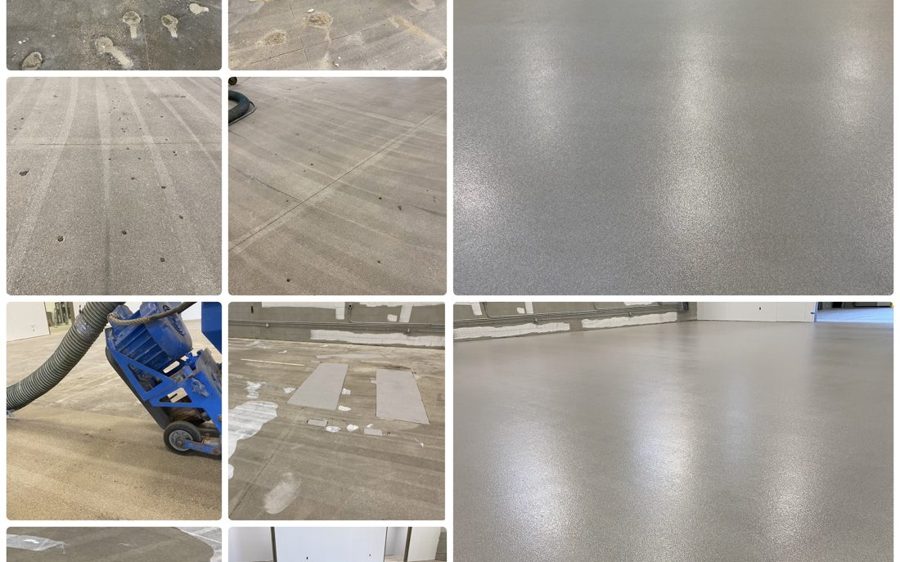
MavPatch Epoxy
Rebuild spalled deck surfaces, ramp noses, and curb edges to sound profile before the membrane goes down. High early strength keeps phasing tight.
View in CatalogMavJoint JF
Seal control and construction joints with a semi-rigid filler that tolerates deck movement and ties into the membrane at every termination.
View in CatalogMAVPRIME EP
High-solids penetrating epoxy primer for dense, polished, or marginal deck substrates where maximum bond is the first requirement.
View in CatalogDetails & Specifications
Standard details for drains, expansion joints, terminations, and curb wraps — plus a CSI 3-part traffic-coating specification ready to drop into your project manual.
Details & Drawings — Parking Deck / Traffic Coatings
Membrane terminations, drain and trench transitions, expansion joint treatments, and curb details. PDF format.
Browse the LibraryCSI 3-Part Specification
Edited 3-part guide specification for the MavPrime EP / MavCoat FC / MavSeal UPA vehicular traffic-coating system, including zoned build-ups, crack routing, and joint treatment.
View SpecificationsIsometric System Shop Drawings
Formal isometric shop drawings for deck coating build-ups are issued through the full Maverick shop drawing library in the Architect Center — layer by layer, ready to attach to a submittal package.
Real Decks, Real Striping
Photographed on our projects — broadcast deck systems with striping coated into the wear surface.
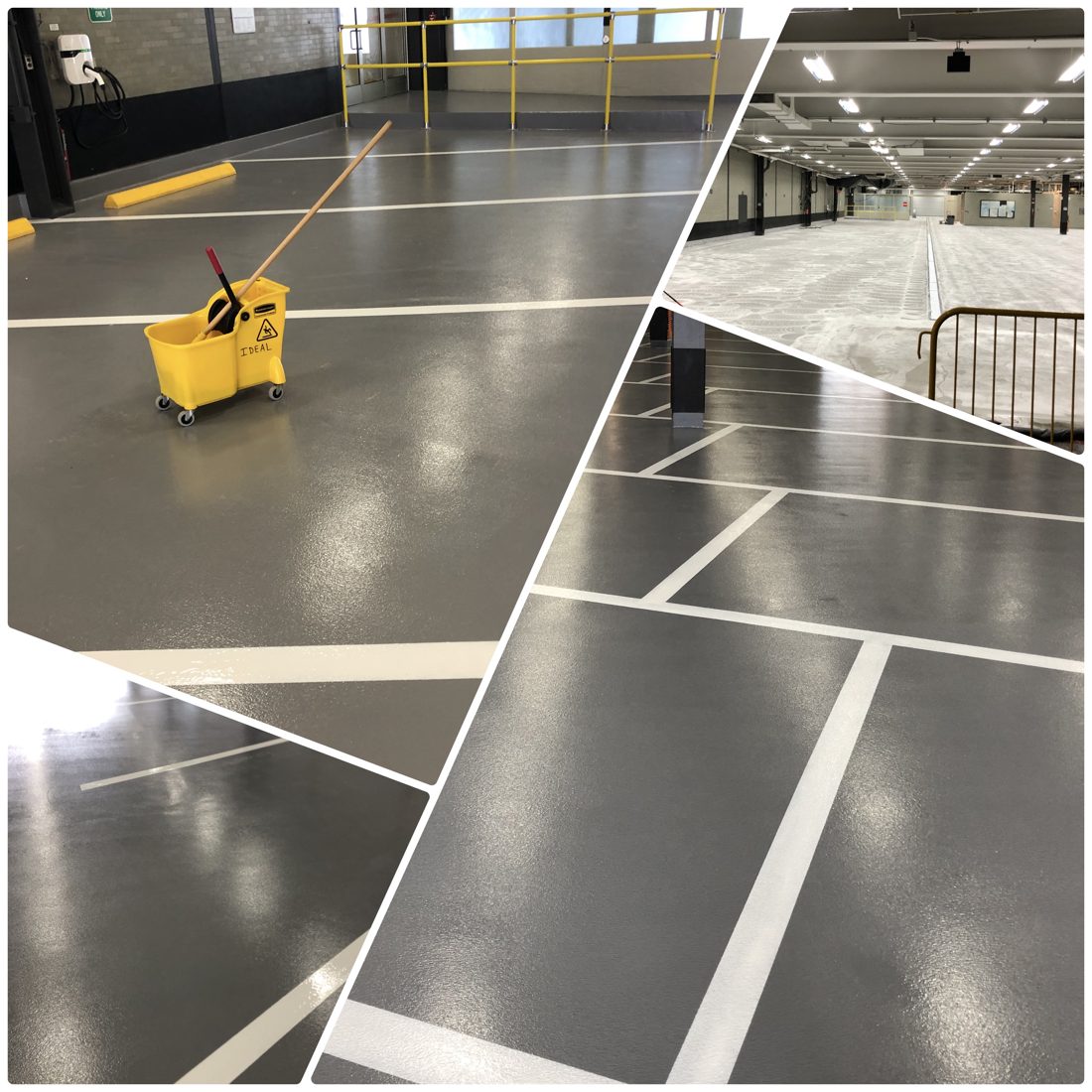
Parking deck broadcast system — striping coated in, not painted on
Your Deck Is Telling You Something. Let's Look.
Leaching, cracking, ponding, exposed aggregate — we'll assess the deck, scope the repairs, and engineer a membrane plan that keeps the structure open while we work.